
 By MUNJAL BLOG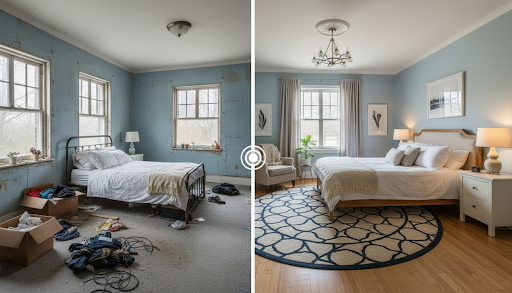
In an era where visual production cycles move faster than ever, creative teams increasingly rely on tools that balance efficiency with conceptual depth. VDraw fits squarely into this shift, offering an AI-driven environment designed to convert ideas into polished visual output. Its capabilities streamline workflows for interior concepting, content refinement, and overall visual asset creation.
How VDraw Positions AI-Enhanced Room Design Within Modern Workflows
The Dual-Path Approach to Transforming Room Images
One of VDraw’s most widely adopted capabilities is its AI Room Design feature, which allows users to reimagine room interiors through either predefined style choices or custom text prompts. This dual approach ensures flexibility without introducing unnecessary operational complexity. The style-selection path supports rapid, consistent transformations, while prompt-based direction enables more nuanced or experimental outcomes. Together, these two options form a streamlined workflow that effectively serves early ideation and structured production needs.
Style-Based Redesign for Predictable Visual Output
Selecting a preset style triggers an automated redesign process that respects the room’s original architecture while refreshing the interior elements. This method is reliable for teams managing repeatable visual tasks such as client proposals, mood boards, or brand-aligned portfolios. It reduces the risk of stylistic drift by tying each output to a stable reference point. For organizations balancing speed and consistency, this structured design option reinforces visual coherence across deliverables.
Text-Prompt Customization for Exploratory Creative Work
The second path, which accepts free-form text prompts, is designed for scenarios where teams need to explore beyond a defined style. Users can specify design themes, materials, moods, or particular inspirations, allowing VDraw to generate interpretations that would typically require deeper manual effort. This flexibility helps teams test unconventional or future-leaning ideas without committing to full 3D modeling or extended rendering cycles. Creative leads use this feature to accelerate exploration and focus their time on evaluating ideas rather than producing them.
Putting AI Room Design Into Real-World Practice
Establishing Visual Direction at the Concept Stage
Concept phases often move through ambiguous territory where decisions depend more on impression than precision. By generating multiple interpretations of a single space, VDraw allows teams to narrow options without over-investing in early drafts. These images serve as shared reference points, helping stakeholders agree on tonal direction, spatial intention, or stylistic boundaries. This alignment reduces downstream friction and enables a more confident move into detailed design work.
Improving the Efficiency of Client Revisions
Client feedback frequently demands adjustments that fit between full redesigns and minor tweaks. VDraw helps bridge this gap. Teams can input revised prompts or switch to alternate styles to generate updated visuals within minutes. This responsiveness shortens revision cycles and helps maintain momentum in client communication. Instead of redrafting from scratch, designers can leverage the system’s consistency to quickly create variations that remain faithful to the project’s established direction.
Maintaining Cohesion Across Large Design Sets
When producing multiple room concepts—whether for hospitality projects, real-estate showcases, or branded content—consistency becomes its own challenge. Using AI Room Design with a fixed style preset ensures a coherent visual language across a large batch of images. This is particularly useful in environments with multiple contributors, where varied skill levels or aesthetic instincts can lead to output inconsistencies. VDraw’s standardized structure helps maintain a unified tone across assets.
Extending VDraw’s Utility Beyond Interior Visualization
Image Editing Tools for Polished Final Assets
Beyond room transformation, VDraw includes image-editing capabilities aimed at bringing visual assets closer to a professional finish. Users can refine lighting, adjust tones, remove visual distractions, or enhance clarity. These tools help teams prepare images for presentation without needing to switch between multiple software platforms. The result is a more concentrated, efficient pipeline that emphasizes refinement rather than rework.
Seamless Removal of Watermarks in Video Assets
For teams managing large libraries of visual materials, watermarked video files can slow production or limit reuse. VDraw integrates a dedicated tool—the Video Watermark Remover—to address this issue directly. By automating watermark removal, the platform reduces reliance on manual frame manipulation or outsourcing. This capability strengthens VDraw’s position as a consolidated environment for preparing visual assets across both static and motion formats.
Transforming Disparate Inputs Into Unified Presentations
Creative teams often gather input from clients, partners, or internal contributors, leading to a fragmented collection of images, drafts, and inspirations. VDraw provides an organized space to convert these scattered materials into coherent visual narratives. Through its combination of AI Room Design, editing tools, and cleanup features, it helps unify disparate content into polished deliverables suitable for presentations, pitch decks, or marketing applications. This consolidation becomes especially valuable when supporting collaborative environments with frequent cross-team contributions.
Strengthening Creative Operations With AI-Driven Tools
Reducing Manual Workload Without Sacrificing Quality
Production timelines frequently suffer from repetitive manual tasks—rewriting scenes, cleaning assets, generating variations. VDraw helps reduce this operational load by automating first-pass creation. Teams can redirect energy toward strategic judgment and applied creativity, while the platform manages the foundational visuals. The resulting workflow broadens capacity without requiring significant increases in staffing or software overhead.
Creating Reliability Through Systematic Generation
AI-driven outputs are not a replacement for professional design insight, but they provide a stable foundation that reduces variability. VDraw’s structured generation process encourages disciplined inputs, minimizing errors caused by inconsistent interpretation or personal bias. Designers remain in control of final decisions, but the tool accelerates early drafting and ensures each iteration begins from a consistent starting point. This combination of speed and structure supports higher throughput without compromising craft.
Preparing Teams for a More Scalable Creative Future
As AI continues to integrate into production environments, teams that adopt practical, workflow-oriented tools position themselves at an operational advantage. VDraw’s features exemplify this shift: instead of aiming for spectacle, they focus on reliability, speed, and flexibility. AI Room Design becomes not only a visualization tool but also a catalyst for faster iteration cycles, reduced bottlenecks, and more scalable creative output. Organizations that incorporate these tools early adapt more easily to evolving client expectations and rising production demands.
 Callum