
 By Callum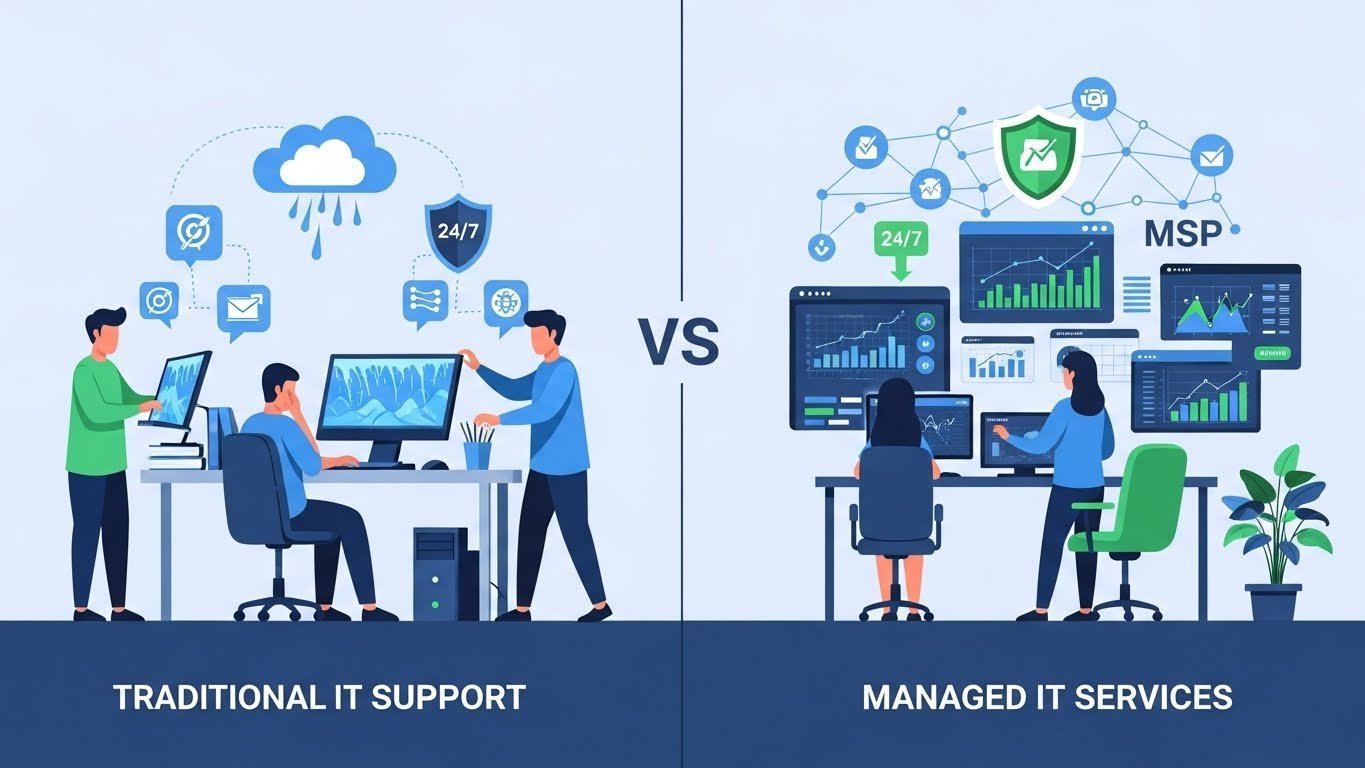
For many businesses, technology is the backbone of day-to-day operations. But when computers crash, emails go down, or systems slow to a crawl, productivity suffers—and frustration sets in. That’s where professional IT support comes in. Yet, as technology evolves, traditional IT support has expanded into something more proactive: managed IT services. While the two terms are often used interchangeably, they represent very different approaches to keeping your business running smoothly.
What Is IT Support?
At its core, IT support provides technical assistance when something goes wrong. It’s often a reactive service—meaning you contact your IT team or provider after an issue arises. This could include troubleshooting software glitches, fixing hardware problems, removing malware, or restoring lost files.
IT support can come in many forms:
- On-demand helpdesk assistance, where you call or email when you encounter a problem.
- On-site technical support, for issues that can’t be fixed remotely.
- Remote monitoring, which allows technicians to identify and resolve issues without visiting your office.
For small businesses, IT support ensures minimal downtime and keeps employees productive. However, this model can sometimes lead to inconsistent costs and unplanned disruptions if problems occur frequently.
What Are Managed IT Services?
Managed IT services take support a step further by focusing on prevention rather than reaction. Instead of waiting for systems to fail, a managed services provider (MSP) continuously monitors, maintains, and secures your technology environment. This proactive approach helps identify and fix issues before they impact your operations.
Typical managed IT services include:
- 24/7 system monitoring and maintenance
- Regular updates, patches, and security checks
- Backup and disaster recovery planning
- Strategic IT consulting and technology roadmapping
Managed IT services often operate on a predictable monthly subscription, giving businesses peace of mind and budget control. The goal is not just to fix problems, but to prevent them—ensuring technology remains an asset rather than a burden.
Key Differences Between IT Support and Managed IT Services
| Aspect | IT Support | Managed IT Services |
|---|---|---|
| Approach | Reactive (fixing issues after they occur) | Proactive (preventing issues before they occur) |
| Cost Model | Pay-per-incident or hourly | Monthly subscription |
| Scope | Focused on troubleshooting | Comprehensive monitoring, maintenance, and strategy |
| Support Availability | Business hours or limited | 24/7 monitoring and support |
| Goal | Resolve technical issues | Optimize and secure your entire IT environment |
Why Businesses Are Shifting Toward Managed IT
While traditional IT support is essential for resolving immediate issues, many organizations are realizing the value of a managed approach. As businesses become more dependent on cloud applications, remote work, and data security, proactive monitoring and strategy are no longer optional. Managed IT providers can identify trends in system performance, detect cybersecurity risks early, and provide guidance on technology investments that align with your long-term goals.
Still, IT support remains a foundational piece of business continuity. Whether you’re a small business or a growing organization, having access to reliable IT support ensures that when something does go wrong, help is available quickly and efficiently.
Finding the Right Fit for Your Business
Deciding between traditional IT support and managed IT services often depends on your business size, budget, and technology needs. Companies with smaller teams or limited infrastructure may find reactive IT support sufficient. In contrast, growing organizations with complex systems or compliance requirements often benefit from the predictability and depth of managed services.
The good news? You don’t necessarily have to choose one over the other. Many IT providers offer hybrid solutions—giving businesses the flexibility to receive both responsive support and ongoing management. Ultimately, the best solution is one that keeps your systems stable, your employees productive, and your data secure.
In short: IT support is there when something breaks. Managed IT services make sure it doesn’t.
Both play a vital role in today’s technology-driven world—what matters most is aligning your IT strategy with your organization’s needs and goals.