
 By Callum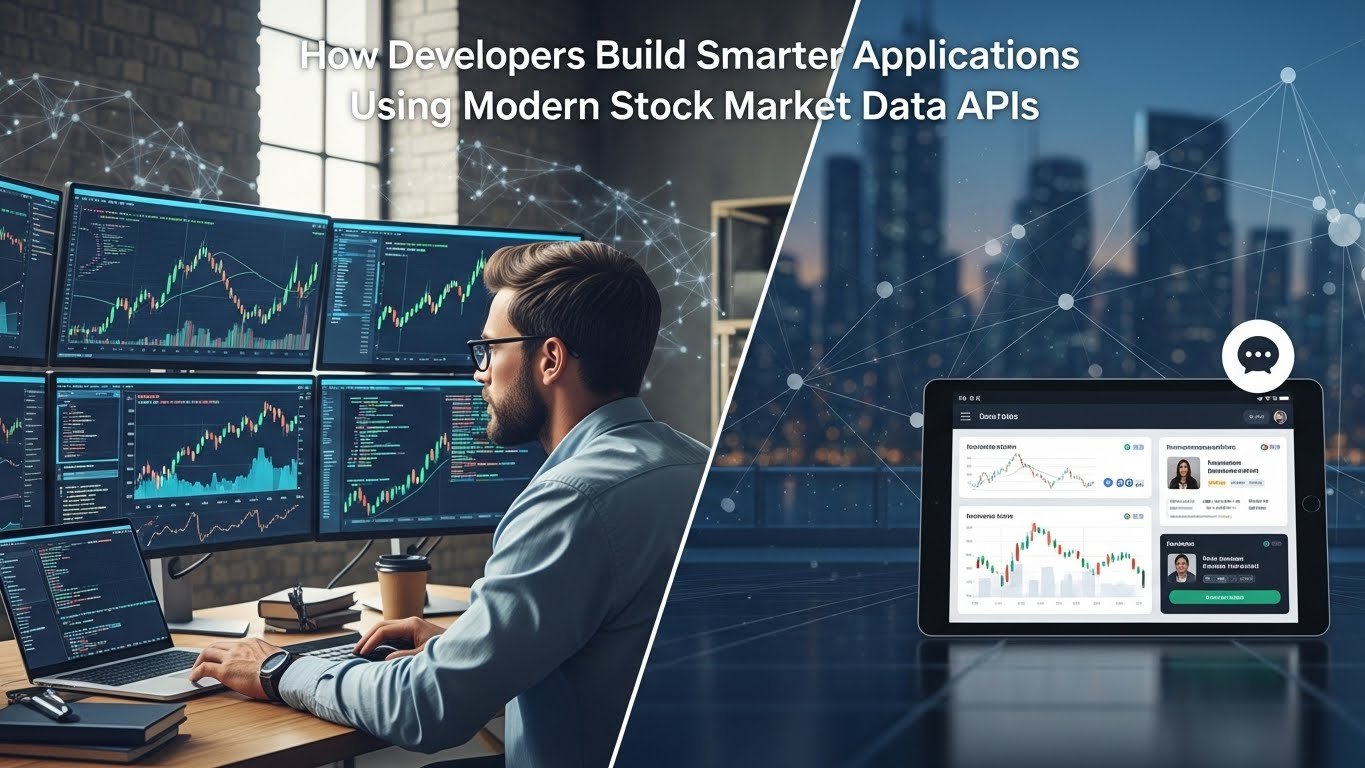
Modern software development is rapidly shifting toward real-time data environments. Whether you build fintech tools, analytics dashboards, automation products or educational platforms, one thing remains constant: applications need fresh, reliable market information. This is especially true for stock-driven products, where even a short delay in pricing can break an entire user experience.
Today’s developers no longer need to scrape websites or maintain heavy market-data servers. Instead, they rely on streamlined solutions such as a stock market data api, which delivers live and historical equity data in structured, easy-to-use formats.
For developers building modern apps, this creates a powerful foundation. Stock-analytics dashboards can update charts in real time. Portfolio trackers can reflect user holdings with instant accuracy. Machine-learning models can ingest consistent OHLCV datasets without dealing with missing candles or inconsistent timestamps. Automated systems, such as risk monitors or trading assistants, can react to market events the moment they happen.
One of the biggest advantages is scalability. Instead of maintaining multiple exchange connections or normalizing data manually, developers can integrate a single API endpoint and receive fully standardized data. This reduces development time, improves reliability and enables teams to focus on experience rather than infrastructure.
Another common use case is mobile fintech apps. Lightweight apps can leverage cloud-processed market feeds instead of expensive internal servers. This allows startups or student teams to build sophisticated financial tools with minimal cost and maximum efficiency.
Educational platforms and research tools also benefit enormously. Professors and students use stock-data APIs to build academic projects, run simulations, experiment with technical analysis or understand market behaviour using real datasets.
The shift toward data-driven development has changed how applications are built. Instead of manually managing data pipelines, developers now design logic on top of reliable, standardized data sources. It removes friction and opens new possibilities for innovation.
For teams working on fintech, analytics, or AI-enabled products, integrating a modern stock-data API is not just convenient — it’s foundational. It allows developers to push creativity further, build faster, and offer users an experience that feels immediate and intelligent.