
 By Callum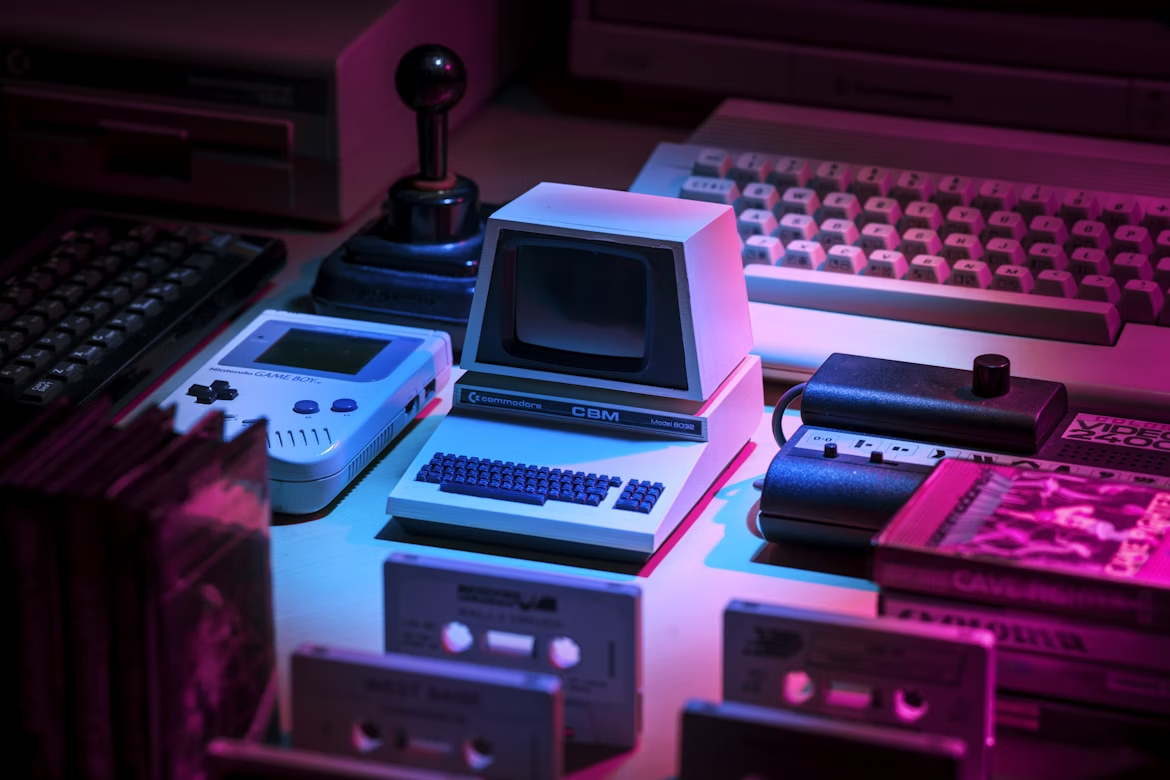
2025 has seen full-on remakes of Metal Gear Solid 3, Final Fantasy Tactics, and the first two Dragon Quest titles, along with remastered versions of The Talos Principle: Reawakened and The Elder Scrolls IV: Oblivion. Remasters and re-releases make up nearly a third of this year’s top-rated video games. As sales data show, fans are perfectly happy to revisit familiar titles with upgraded visuals. But many diehard gamers take these success stories as a sad sign for the future of an industry which seems to have hit a creative standstill.
A genre steeped in controversy
Banking on nostalgia has proven profitable in the gaming industry, with retrogaming gaining traction amongst millennials wishing to revisit the classics from their youth and Gen Z collectors embracing the vintage aesthetic. Yet, the eagerness to cash in on cherished classics has led to plenty of rushed, lackluster remakes suffering from poorly implemented AI or clumsy motion controls.
Studios that had previously struck gold stumbled on their next attempt, such as Capcom following up on the atmospheric remake of Resident Evil 2 with an underwhelming Resident Evil 3 remake that cut several iconic enemies and areas. Similarly, Blizzard came up with a Warcraft III: Reforged remaster that was lambasted for its poor graphical updates, besides stripping away core features. Many remakes still topped the charts, such as Oblivion: Remastered outperforming the original by a large margin.
A case for remakes benefitting the industry
Remakes lend themselves to accusations of creative bankruptcy among gamers blaming studios for recycling old ideas instead of taking risks. With development costs soaring industry-wide, however, taking chances on experimental concepts increasingly requires the financial stability that remakes can provide. Remakes also create opportunities for studios to test bold new ideas within the safe bounds of an established franchise.
Several of the Resident Evil series’ modern mechanics first appeared in remakes. Likewise, the upcoming release of the Yakuza Kiwami 3 remake will introduce a new companion story to the main narrative. Incidentally, revisiting older titles can be a powerful way to attract fresh players who missed a game when it first came out. And this trend has been a staple of the industry for decades.
Gaming remakes: no passing fad, but a trend deeply rooted in history
As early as the 1980s, studios were already revisiting and updating older hits. The now-defunct strategy game developer Automated Simulations reworked the 1979 dungeon-crawler Temple of Apshai for the 1985 Temple of Apshai Trilogy. Beyond these early computer RPGs, leaders like Nintendo joined the movement, giving Super Mario All-Stars a 16-bit facelift in the 90s. The momentum carried into the 2000s with major successes like the Metroid Prime Trilogy, which sported an all-new 3D look on the GameCube.
Yet it was arguably The Legend of Zelda: Ocarina of Time 3D that underscored that remakes could be more than superficial cash grabs. Released in 2011 as an updated version of the 1998 Nintendo 64 classic, this Nintendo DS edition elevated the original with improved graphics, alongside brand-new gameplay features like stereoscopic 3D. In keeping with its decade-old habit of rehashing smash hits, Nintendo is bringing more remakes to the Switch 2, starting with Dragon Quest VII: Reimagined in February.
A remake boom carrying on in 2026
Going into 2026, many studios have announced modern reimagining of past titles, ranging from visual novels like Danganronpa 2×2 to action RPGs like Gothic 1 Remake. Long-awaited remakes could also turn up in the coming months, such as a Prince of Persia remake. First launched in 1989, Jordan Mechner’s cinematic platformer reshaped the gaming medium, inspiring just as many copycats as iGaming titles.
From Persian Treasures to Gates of Persia, online gambling platforms boast hundreds of slots to explore. Players can access free slots with no download required. They may eventually transition to real-money games, creating an account to claim bonuses like free spins and no-deposit offers. Newcomers may even grab welcome packages upon signing up.
While developers and publishers are well aware of the controversies surrounding remakes, many argue that reimagining older titles can appeal to a broader demographic. Remasters and remakes can effectively co-exist with fresh IPs. Launching the same week as Clair Obscur: Expedition 33, Oblivion Remastered didn’t overshadow its AA counterpart. A GOTY contender, Clair Obscur just won big at the latest Golden Joystick Award. One of this year’s best-selling titles, Battlefield 6 is no remake either, showing that remade games do not necessarily cannibalize other genres.